Imagine a warehouse where smart sensors track every product and automatically reorder stock when levels run low.
Utilizing linked devices to make operations run more smoothly, quickly, and efficiently is the power of the Internet of Things in supply chains.
Supply chains today face growing challenges like delays, rising costs, and limited visibility, making digital transformation essential. In this guide, you’ll learn its purpose, benefits, and real-world applications. Let’s get the ball rolling!

What Is IoT in Supply Chain Management?
At its core, IoT-based supply chain management refers to a network of connected devices, sensors, and assets that share real-time data across every stage of logistics.
By asking what IoT is in the supply chain management software, the answer goes beyond technology; it’s about creating smarter operations. The main purpose is to give businesses better visibility into goods, automate routine tasks, and improve efficiency.
From tracking shipments to monitoring warehouse conditions, IoT ensures supply chains run more smoothly and with fewer disruptions.
Key Benefits of IoT in Supply Chain
- Real-time tracking of goods: You always know where items are, whether in warehouses, on trucks, or at sea, helping limit delays and loss.
- Monitoring storage conditions: Sensors check temperature, humidity, or any harsh environment so perishable or sensitive goods stay safe.
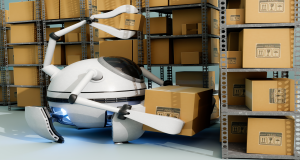
- Efficient warehouse operations: Automation, robotics, and AI help locate items, sort them, and keep workers safe, all boosting speed and accuracy.
- Better contingency planning: With data on traffic, weather, or other disruptions, firms using IoT in the supply chain can reroute or adjust plans in real time to avoid trouble.
- Predictive maintenance: IoT sensors detect wear or faults in machines before breakdowns happen, reducing downtime and repair costs.
- Enhanced segmentation of goods: Data from IoT tools helps decide where goods should go, how they should be grouped, or which markets they fit best—all improving strategy and reducing waste.
Challenges of IoT Adoption in Supply Chains
IoT adoption isn’t always easy. When businesses try to use IoT in the supply chain, they often face these hurdles:
- Skill Gaps: Staff and drivers may be unfamiliar with connected devices or data systems. Training is essential.
- Data Storage & Management: IoT generates loads of data. Storing, organizing, and making sense of it can overwhelm older systems.
- Security Risks: More devices mean more potential weak points. Without strong security and privacy protections, data leaks or cyberattacks are real dangers.
- Connectivity Issues: IoT depends on reliable internet or network access. In places with spotty connectivity, devices may fail or lose data. The coming of 5G may help, but coverage is still a challenge in many areas.
Real-World Use Cases of IoT in Supply Chains
- Smart Warehousing: Amazon uses IoT-enabled robots and sensors in its fulfillment centers to locate products, move them, and process orders faster and more accurately.
- Fleet Management: Companies like DHL and FedEx use telematics and IoT devices and sensors to track vehicle routes, driver behavior, fuel use, and engine health, helping them optimize routes and lower operating costs.
- Cold Chain Monitoring: To safely transport food or pharmaceuticals, firms like Walmart and Maersk use IoT to monitor temperature, humidity, and storage conditions in real time to avoid spoilage.
- Yard Management: IoT devices can help you track trailers, containers, and other assets in large distribution yards, improving the use of space, reducing wait times for loading bays, and making operations smoother.
- Inventory and Asset Tracking: Tools like RFID and GPS-enabled trackers give businesses a live picture of inventory levels and where assets are. This reduces loss and misplacement and improves stock accuracy.
How to Implement IoT in Supply Chain
1. Identify pain points
Start by determining where we are wasting time or money. Perhaps there are mistakes in the inventory, high carrying costs, or regular delivery delays. When thinking about IoT in supply chain solutions, it helps to concentrate on one main problem.
2. Run a pilot project
Don’t try to change everything at once. Equip one warehouse or part of your fleet with sensors. Measure the results. If it works well, scale up gradually.
3. Select the right technology partner
Make sure the vendor offers reliable hardware, solid cloud platforms, and strong data analytics. Also, check compatibility with your current systems (ERP, etc.) to avoid messy integrations.
4. Change management
Train your staff not just on devices but on interpreting data. Help teams understand how IoT-powered insights change workflows. Effective change management makes the difference between using what IoT is in supply chain and fully benefiting from it.
Future Trends in IoT for Supply Chain
- 5G Integration: Faster, more reliable networks like 5G are making real-time data transfer more consistent. This means IoT devices in supply chains can report status or anomalies more quickly.
- AI/ML-Driven Analytics: When artificial intelligence and machine learning are combined with IoT, systems can not only collect data but also predict what might go wrong, for example, which machine might fail or forecast delays.
- Blockchain for Security & Transparency: Using blockchain alongside IoT helps secure data (e.g., tamper-proof records from source to shelf), improving trust and traceability. This trend helps where supply chains cross many hands and regions.
- Edge Computing: Instead of sending every piece of data back to a central cloud, more processing is happening right where data is generated (at the “edge”). That reduces delays and supports faster decision-making.
Conclusion
To sum up, knowing what the Internet of Things (IoT) is in the supply chain reveals how connected devices transform logistics by introducing automation, visibility, and data-driven decision-making.
Supply chains are transformed by IoT because it increases their resilience, efficiency, and transparency. Its true goal is to build more intelligent, adaptable ecosystems that react instantly; it’s not just about the devices and sensors.
Supply chains with IoT capabilities will be the most prepared to handle upcoming disruptions and take advantage of new opportunities as technology advances.
Frequently Asked Questions (FAQs)
What is the difference between IoT and RFID in supply chains?
RFID is a way to tag and track items using radio tags. IoT includes RFID plus sensors, networks, and software, so data is collected, shared, and used in real time.
What ROI can businesses expect from IoT in logistics?
You can often see returns of 35-50% through reduced waste, fewer delays and stockouts, and better routing.
How does IoT improve inventory management?
It gives real-time visibility of stock, automates counting, and helps predict when you’ll need to restock. Fewer errors and less overstock or stockouts.
What costs are involved in IoT implementation?
You’ll need hardware (sensors/devices), connectivity, software/platform, integration with existing systems, and training. There are also ongoing costs for maintenance, data storage, and security.