Every unsold product on a shelf and every stockout lost to a competitor starts with one thing: poor forecasting.
Supply and demand forecasting techniques provide businesses with the tools to predict customer needs accurately. Precise forecasting not only avoids waste but also ensures that teams and budgets match real demand.
In this blog post, we’ll walk through the 10 best supply and demand forecasting techniques that turn uncertainty into strategy and help businesses stay one step ahead. Let’s get started
1. Survey Method
The survey method is one of the most straightforward supply and demand forecasting techniques, as it collects insights directly from consumers, customers, or market participants. Instead of relying only on past data, surveys capture current attitudes, preferences, and buying intentions, giving businesses a clearer picture of future demand.
Surveys can be carried out through online forms, focus groups, telephone interviews, or in-person questionnaires. The accuracy of this method depends heavily on the sample size, the extent to which the participants represent the broader market, and the quality of the questions asked.
2. Delphi Method
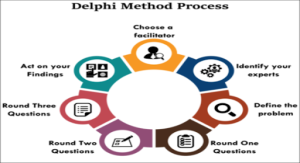
A common group-consensus method for supply and demand forecasting is the Delphi method. It gathers insights from a panel of experts who provide forecasts individually, which are then reviewed and refined in multiple rounds until a consensus is reached.
This process minimizes personal bias and leverages collective expertise for more reliable predictions.
The Delphi method is particularly useful when dealing with complex or uncertain markets where historical data alone is not enough.
Through the integration of structured feedback and expert judgment, companies can produce comprehensive forecasts that inform strategic planning and mitigate risk in unpredictable situations.
3. Statistical Methods
Among the most widely used supply chain demand forecasting methods are statistical methods, which rely on analyzing historical data to predict or prepare for future demands. These methods work by identifying patterns in past sales or demand and projecting them forward.
Common approaches include time series analysis, which tracks demand over time; regression analysis, which examines relationships between demand and influencing factors; ARIMA models for handling complex data; and exponential smoothing for capturing recent changes.
Statistical methods are best suited for businesses operating in data-rich environments where clear historical patterns exist, providing a reliable foundation for accurate demand forecast.
4. Expert Opinion Method
Using the expertise and experience of industry experts, the expert opinion method is one of the most straightforward approaches to supply and demand forecasting.
Based on their knowledge of consumer behavior, market trends, and industry dynamics, experts like market analysts, consultants, or senior managers offer insights on future demand and supply chain management.
This method is especially useful when historical data is scarce or when market conditions are changing rapidly, such as during product launches or economic shifts.
However, its accuracy depends heavily on the expertise and objectivity of the individuals consulted. For best results, it’s often combined with data-driven approaches to balance judgment with evidence.
5. Barometric Method
The barometric method is one of the techniques for forecasting supply and demand that relies on external indicators to predict future trends.
It uses data such as economic growth, industry performance, or market signals to anticipate shifts in customer demand. For example, rising employment levels may signal higher demand for consumer goods.
This approach works best in industries that are highly sensitive to economic or environmental changes. While it doesn’t always provide precise numbers, it helps businesses identify directional trends.
In order to remain competitive in shifting market conditions, businesses can make early strategy adjustments by keeping an eye on leading, lagging, and coincident indicators.
6. Econometric Method
Economic and market variables are combined with historical sales data in the econometric method, a statistical approach to supply and demand forecasting. Regression analysis and other tools are used to determine the connections between demand and variables like pricing, market trends, and income levels.
After establishing these connections, companies can predict how future demand will be affected by changes in these factors.
When it comes to products with stable data patterns and lengthy sales histories, this approach is very trustworthy. While it requires strong statistical skills and large datasets, its accuracy makes it a valuable tool for long-term planning, investment strategies, and anticipating market shifts.
7. Sales Force Opinion Method
The sales force opinion method is one of the practical supply and demand forecasting models that relies on insights from sales representatives and managers.
Since sales teams interact directly with customers, they often have firsthand knowledge of purchasing behavior, regional trends, and future demand expectations.
Businesses can produce demand forecasts that accurately reflect the situation on the ground by gathering and integrating their input. This technique works particularly well for finding patterns that are location- or customer-specific.
Predictions may be impacted by personal biases, so statistical or market-driven approaches are frequently used in conjunction with them to improve accuracy and guarantee more impartial outcomes.
8. Trend Projection Method
A popular strategy in forecasting the supply and demand is the trend projection method, which extrapolates historical sales trends to forecast future demand. It makes the assumption that demand will keep trending in the same way as before, whether that means stability, growth, or decline.
After fitting a trend line to historical data using mathematical models, businesses project that line into the future.
This approach works best in markets that are stable and where historical demand trends are probably going to persist.
Even though it offers clear and rapid forecasts, businesses still need to take into consideration outside variables that could buck trends, such as competition or regulations.
9. Machine Learning and AI-Based Methods
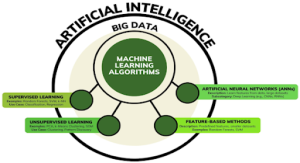
Among modern methods for predicting supply and demand, machine learning and AI stand out for their ability to process vast amounts of complex data. These methods use algorithms such as neural networks, decision trees, and random forests to detect patterns in historical sales, customer behavior, and market trends.
The strength of AI lies in its adaptability; it continuously learns from new data, making forecasts more accurate over time.
While implementation requires quality data and technical expertise, the results can significantly improve planning, inventory management, and overall efficiency.
For businesses handling large datasets, AI-based forecasting offers one of the most precise and scalable solutions.
10. Market Test Method
The market test method is a hands-on approach within supply and demand forecasting techniques that involves introducing a product in a limited market before a full-scale launch.
Real-time information on sales, preferences, and market acceptance can be obtained by businesses by monitoring customer responses.
This approach is especially useful for new products or when breaking into uncharted markets with scant or no historical data.
Although market testing yields very trustworthy insights, it can be expensive and time-consuming, and the results might not always be indicative of the behavior of the market as a whole. Still, it remains a powerful tool for minimizing risk before committing to large-scale production.
Additional Supply and Demand Forecasting Techniques
Beyond the main supply and demand forecasting techniques, several additional methods can add value to predictions:
- Simulation Methods: Test different demand scenarios using computer models.
- Seasonal Decomposition: Break down data into seasonal, trend, and irregular components.
- Causal Inference: Measure how factors like promotions or ads directly impact demand.
- CPFR (Collaborative Planning, Forecasting, and Replenishment): Align forecasts by sharing information with suppliers and partners.
- Predictive Sales Analytics: Use data-driven insights to predict customer behavior under various conditions.
Challenges in Supply and Demand Forecasting
- Poor data quality or gaps: Inaccurate, incomplete, or outdated historical data leads to flawed predictions and unreliable forecasts.
- Market volatility and external disruptions: Economic shifts, political events, or sudden consumer behavior changes can throw off even the most sophisticated models.
- Rapidly changing customer preferences: When consumer behavior evolves quickly—due to trends, seasons, or new market influences—historical patterns may lose relevance.
Summary
Businesses have several options to increase accuracy with the top ten supply and demand forecasting techniques, which range from time series analysis and regression models to AI-driven tools and cooperative approaches.
Depending on market volatility, industry context, and data availability, each strategy has advantages. A mixed strategy guarantees more accurate forecasts, whereas relying solely on one approach may limit results.
Businesses can make better plans, eliminate wasteful spending, and stay competitive in changing markets by implementing the proper mix. The future belongs to businesses that treat forecasting as both a science and a strategy for growth. Start refining your forecasting strategy today to stay ahead of demand.
Frequently Asked Questions (FAQs)
What are the most common supply and demand forecasting techniques?
Popular methods include time series models (like ARIMA), regression analysis, exponential smoothing, and machine learning tools, each offering unique strengths depending on your data and needs.
Which forecasting method is best for new products?
Your best option in the absence of historical data is to use qualitative methods like expert judgment, product analogy, or Delphi-style structured forecasting.
How accurate are these forecasting methods?
Accuracy hinges on data quality, method selection, and market volatility. That said, combining several techniques, statistical and judgment-based, often provides more reliable results.
Can small businesses use advanced forecasting tools?
Absolutely. Cloud-based solutions have made advanced tools, including predictive analytics, more affordable and accessible, even for smaller operations.
Why should companies use multiple forecasting technologies?
Depending on just one method can leave gaps or errors. Blending different techniques lets businesses adapt to uncertainty and improve overall forecast accuracy.