Technology is redefining how goods move across the globe, turning traditional logistics into intelligent, data-driven systems. From automated sorting to predictive route planning, digital tools are making operations faster and more accurate.
This case study on technology-driven logistics transformation examines how artificial intelligence (AI) has become the primary driving force behind this transformation. AI enables businesses to make informed decisions in real time, forecasting demand and optimizing delivery routes.
In this article, we focus on a logistics company that integrated AI into its operations, reducing errors, improving delivery performance, and setting a strong foundation for efficient and sustainable logistics management. Let’s get started!
Overview of the Logistics Industry Before AI Integration
Prior to AI, logistics companies faced operational difficulties. Numerous tasks, including scheduling, inventory checks, and order sorting, were completed by hand or with simple software, which resulted in slow throughput and frequent errors.
Poor supply chain visibility was reported by nearly 43% of businesses, who said they had little knowledge of supplier performance. Meanwhile, because inefficiencies and redundancies were not addressed, transportation and warehousing costs increased.
Businesses’ decisions were based on outdated or incomplete information because they lacked real-time data capabilities. In times of disruption (like sudden demand spikes or shipment delays), many could only react after the problem grew, rather than respond proactively.
This background helps to frame any technology-driven logistics transformation case study by highlighting the gaps AI is meant to fill.
Introduction to AI in Logistics
Artificial Intelligence (AI) in logistics refers to robots, automation, predictive analytics, and machine learning. Machine learning enables machines to improve over time by learning from historical data (such as sales, routes, or delays).
Using that knowledge, predictive analytics makes predictions about potential outcomes, such as next month’s demand or potential areas for delays.
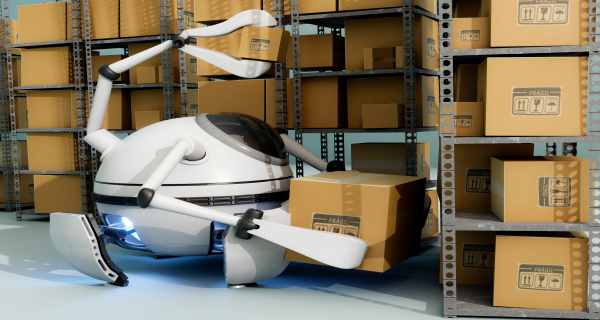
Automation and robotics take over monotonous jobs, such as packing, moving, and sorting items in a warehouse, and they do so more quickly and accurately.
AI is important because it directly addresses contemporary logistics issues. Businesses can deliver on time, use less fuel, and prevent traffic delays by using demand forecasting and route optimization.
There are fewer stockouts and less space wasted thanks to warehouse automation and improved inventory control. Predictive maintenance and real-time tracking enable managers to identify problems (such as when a machine is likely to break) before they arise and address them before they cause everything to lag.
A case study on technology-driven logistics transformation seeks to highlight all of those advantages.
Case Study Background
Company Profile
With operations throughout Southeast Asia, the highlighted company is a mid-sized logistics company with its headquarters located in Singapore. It manages three warehouses, employs more than 500 people, and operates a fleet of roughly 150 delivery trucks.
It processes about 15,000 shipments every day for customers in manufacturing, retail, and e-commerce.
Before adopting AI, the company faced serious logistics challenges. Manual processes in inventory and order handling led to frequent mistakes. Route planning was inefficient, causing high fuel costs and late deliveries.
Predicting how much inventory to hold was often inaccurate, causing stockouts or overstocking, hurting both cost and customer satisfaction.
Transformation Goal
Through this case study on technology-driven logistics transformation, the company sought to accomplish a number of goals, including lowering costs (particularly in labor, warehousing, and transportation), increasing delivery speed, decreasing errors, and improving visibility throughout its operations.
Stated differently, their goals were improved customer satisfaction, fewer stock problems, more effective routes, and more intelligent forecasting.
Implementation Process
Technology Integration
AI-powered tools were introduced by the company, including digital twins to simulate planning operations, chatbots to provide customer updates, IoT sensors across the fleet and warehouse to gather real-time data, and predictive algorithms to forecast demand and identify delivery issues.
These tools were integrated with supply chain management and ERP (Enterprise Resource Planning) systems to guarantee smooth data flow and automated decision-making. For instance, Bosch’s AI reception process was enhanced through ERP integration and precise label recognition.
Process Re-engineering
Order fulfillment and shipment tracking were automated: when orders arrive, AI systems route them, assign picking tasks, and update the status automatically.
Predictive analytics aided demand planning by utilizing inventory data, past sales, and outside variables to modify stock levels in advance. Businesses also used dynamic routing optimization, changing delivery routes in reaction to weather or traffic conditions.
Stakeholder Involvement
Training employees was essential. Employees received training on new AI systems, including how to handle exceptions and read dashboards.
Teams from IT, procurement, operations, and transportation worked together to coordinate on rollout timelines, system requirements, and data standards.
This multi-team participation facilitated adoption and prevented resistance in numerous case studies.
Key Results and Performance Improvements
Quantifiable Outcomes
- Delivery times dropped by around 20-30% once routes were optimized with AI, reducing delays and idle time.
- Transportation and fuel costs fell due to more efficient routing and vehicle utilization.
- Order accuracy improved, with fewer mistaken shipments, cutting returns and rework.
- Inventory turnover rates rose because predictive planning meant stock was better matched to demand: less surplus, fewer stock-outs, and less capital tied up in idle inventory.
Qualitative Benefits
- Customers began receiving more reliable updates and real-time tracking, giving them peace of mind and boosting satisfaction.
- Managers and planners gained clearer insights into trends and risks (e.g., demand spikes, vehicle delays), enabling proactive decisions rather than reacting after problems occur.
Challenges Faced During Implementation
1. Data Integration and Quality Issues
The company found that historical data was often inconsistent, scattered in multiple systems (silos), or incomplete. These issues hurt the accuracy of AI models.
They had to standardize formats, clean up data, and create connections between the new AI platforms and the outdated legacy systems in order to address this.
2. Resistance to Technological Change
Workers feared AI would replace them in their jobs or alter their accustomed workflows. Many people had trouble picking up new skills or doubted the advantages. Clear communication, staff involvement in the transformation plan, and training were necessary to overcome this.
3. High Initial Costs or System Downtime
Setting up AI systems meant investing heavily in infrastructure, software, and integration. There were also periods of downtime or reduced productivity while systems were being installed and tested, and staff were trained.
These upfront costs made adoption harder, especially for smaller players.
4. Cybersecurity and Data Privacy Concerns
Gathering a lot of sensitive data, such as tracking information, shipment details, and customer information, is necessary when using AI in logistics. This increases the possibility of misuse, illegal access, and data breaches.
Complying with data protection regulations in various jurisdictions also makes things more complicated. Encryption, robust security procedures, and unambiguous privacy policies are required.
Future Outlook: The Road Ahead for AI in Logistics
Emerging Innovations
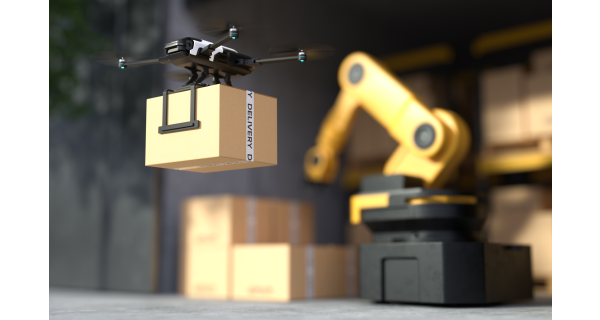
Delivery drones and driverless cars are becoming more widespread, enabling businesses to reach clients more quickly and in difficult-to-reach locations.
Blockchain is also becoming more and more important. It is being used to create transparent, impenetrable logistics networks that allow companies to reach customers faster and in hard-to-reach places.
AI is being combined with environmental goals: predictive sustainability tools and carbon-tracking systems help measure and reduce emissions in transport and warehouses.
Long-Term Business Impact
Companies that embrace these innovations gain a competitive advantage through digital agility—that is, the ability to adapt quickly when conditions change.
Such businesses build resilient supply chains (able to withstand shocks), adaptive, and intelligent, using AI to predict problems before they arise and respond proactively.
In a technology-driven logistics transformation case study, these future trends show how logistics won’t just be faster or cheaper, but more sustainable, more robust, and more customer-centric.
Summary
In this case study on technology-driven logistics transformation, artificial intelligence (AI) changed the logistics foundation of the business.
Manual tasks gave way to automation, inventory became aligned with demand, routes became smarter, and deliveries became more reliable. Cost savings, faster turnaround, and improved accuracy became the new norm.
Beyond this one instance, AI is now the mainstay of contemporary logistics innovation, enabling supply chains to be more transparent, agile, and strategically oriented.
Businesses should start using AI tools now to improve resilience, future-proof operations, and achieve sustainable logistics excellence in order to remain competitive in a world that is changing all the time.
Frequently Asked Questions (FAQs)
What exactly can AI do in logistics?
AI helps with demand forecasting, route optimization, predictive maintenance, warehouse automation, and real-time monitoring of shipments.
Is AI only for large logistics firms?
No. Even small and medium logistics companies can use AI tools to streamline operations, reduce errors, and improve service.
How much does it cost to implement AI in logistics?
Costs vary widely depending on scale, infrastructure, and complexity. Major cost components include software, hardware, integration, training, and maintenance.
How long before you see results from AI transformation?
Some gains, like improved route efficiency or error reduction, can appear in weeks or months. More structural improvements (inventory turnover, full automation) may take a year or more.