In a world where competitiveness is determined by efficiency, supply chain automation is a growth multiplier, not a luxury.
As companies transition away from sluggish, error-prone manual systems, there is an increasing need for supply chain automation tools. Automation boosts accuracy, speed, and real-time visibility, helping companies make smarter decisions and scale efficiently.
In this article, we’ll talk about the top 8 must-have supply chain automation tools driving business growth in 2025 and beyond. Let’s jump in!

The Power of Supply Chain Automation
Supply chain automation is the process of executing and coordinating supply chain operations automatically as opposed to manually using software, systems, and intelligent tools.
It reduces human error, increases productivity, and provides real-time operational visibility.
As adoption surges, with over 75% of firms expected to use cyber-physical automation by 2027, it’s reshaping how businesses scale. Next, we’ll explore the 8 key supply chain automation tools every growing business should adopt.
1. Inventory Management Automation Tools
Inventory automation tools such as NetSuite ERP, Zoho Inventory, and Fishbowl Inventory continuously track stock levels in real time, using barcode/RFID scanning, multi-warehouse visibility, and synchronized data across all sales channels.
These systems help reduce stockouts, cut down holding and carrying costs, and improve order accuracy by avoiding mistakes in inventory counts. They also forecast when to reorder, helping reduce excess inventory.
Crucially, they seamlessly integrate with warehouse management systems and eCommerce platforms (Shopify, WooCommerce, BigCommerce, etc.), generating end-to-end visibility and guaranteeing that your financial records, warehouses, and online storefronts all remain in sync.
2. Warehouse Management Systems (WMS)
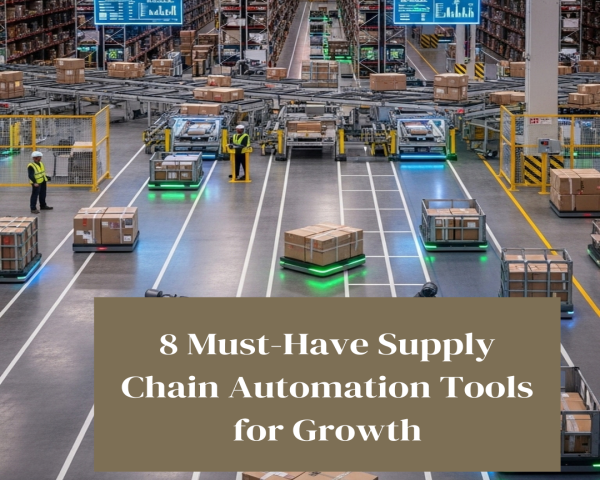
Core warehouse tasks, such as receiving goods, picking orders, packing, and dispatching, are automated by systems like SAP Extended Warehouse Management, Manhattan Associates, or Oracle WMS with little to no human input.
They frequently work in tandem with AI and robotics: sensors track stock flow, AI plans the best picking routes, and robots (also known as autonomous mobile robots, or AMRs) move goods.
This reduces reliance on manual labor while significantly increasing throughput. A robust WMS increases output, reduces errors, and allows operations to scale more easily without being constrained by human constraints.
3. Transportation Management Systems (TMS)
For logistics, tools like Project44, Transporeon, or MercuryGate are among the most important supply chain automation tools.
A TMS helps manage carriers by selecting the best options based on cost, dependability, and speed. It also performs freight audits and optimizes route planning.
You can track shipments, identify delays, and update routes while on the go with real-time tracking, which provides complete visibility across delivery networks.
Going one step further, predictive analytics helps minimize shipping delays and avoid cost overruns by foreseeing problems like traffic, weather, or carrier bottlenecks.
4. Order Fulfillment and Automation Platforms
Top supply chain automation platforms that connect sales, inventory, and logistics include ShipBob, Cin7, and Skubana. They automatically send orders to the warehouse for picking, packing, and shipping, sync inventory across warehouses, and pull in orders from various channels.
Benefits include a significantly faster order processing time and fewer errors due to the reduction of human steps like data entry.
In order to improve customer satisfaction and streamline fulfillment, they also assist businesses in integrating online and offline channels. This includes integrating sales from marketplaces, physical stores, and websites into a single system.
5. Procurement Automation Tools
Purchase requests, approvals, and vendor selection are all automated by tools like Coupa, SAP Ariba, or Precoro.
These supply chain automation tools eliminate numerous manual steps by enforcing regulations, automatically routing approvals, and assisting you in selecting suppliers based on predetermined criteria.
This helps guarantee adherence to contracts and policies and reduces maverick spending, or unapproved or off-policy purchases.
They also provide complete financial visibility when connected to your ERP system; the alignment of orders, invoices, and expenses gives you more control over spending and budgeting.
6. Demand Forecasting and Planning Software

AI and machine learning (ML) are used by tools such as Kinaxis RapidResponse, ToolsGroup, or E2open to evaluate historical and current data, including promotions, seasonal patterns, and outside signals, to forecast demand.
This helps prevent overproduction (wasting inventory) and understocking (losing sales). The insight from these tools enables faster, data-driven decision-making, improving both planning accuracy and responsiveness.
They are essential supply chain automation tools for businesses aiming to grow smartly.
7. Supply Chain Visibility and Collaboration Platforms
Platforms that emphasize visibility and collaboration, like FourKites, Infor Nexus, or Locus, are strong supply chain automation tools. Across international, multimodal networks, they provide real-time visibility into shipments, orders, and inventory.
When issues like delays, bad weather, or capacity limitations occur, these tools send out predictive alerts and share data amongst suppliers, logistics companies, and carriers.
Their role becomes critical in managing global supply chain disruptions, enabling companies to respond proactively rather than react passively. With collaboration built in, the tools help coordinate responses, reduce risk, and maintain smoother operations even under pressure.
8. Robotic Process Automation (RPA) in Supply Chain Operations
Powerful supply chain automation tools like UiPath, Automation Anywhere, or Blue Prism manage repetitive administrative tasks, such as order data entry, shipment tracking, and invoice processing, without requiring constant human labor.
Robots don’t get tired or make “copy-paste” mistakes, so using RPA results in much higher accuracy, faster turnaround times, and significant cost savings (fewer labor hours needed). For instance, SF Supply Chain saved tens of thousands of hours of manual labor by automating data entry using UiPath.
As the business scales, RPA supports growth because you can increase the number of bots or workflows rather than linearly increasing headcount.
Benefits of Supply Chain Automation for Business Growth
Supply chain automation tools deliver cross-functional gains:
- Enhance visibility and traceability so that you know what’s happening at every step.
- Improve cost-efficiency and productivity by reducing waste, lowering labor costs, and speeding up operations.
- With accurate, real-time data, businesses make decisions supported by evidence—not guesses.
- Offers scalability and flexibility, letting companies expand, adapt to demand swings, or face disruption without falling apart.
- Delays, errors, and risks drop because issues are detected early.
Challenges and Considerations Before Implementing Automation
Supply chain automation tool implementation isn’t always easy. High upfront costs associated with system acquisition, installation, and customization are typical roadblocks.
Employees in many organizations are resistant to change because they are uneasy with new procedures or fear losing their jobs.
Then there are integration issues; legacy systems, incompatible data formats, and siloed information can make it hard for new tools to work together.
Summary
Supply chain automation tools foster efficiency, resilience, and long-term growth in addition to speed.
Adopting the eight essential automation tools puts your company in a position to outperform competitors by reducing errors and expenses and increasing agility.
Employing these tools gives businesses a significant competitive advantage in a world of disruptions and growing customer expectations.
The future belongs to supply chains that are digital, flexible, and proactive. Start your automation journey now—even small steps today can lead to transformative growth tomorrow.
Frequently Asked Questions (FAQs)
What is supply chain automation?
It’s the use of technology and software to streamline and control supply chain processes, reducing manual work and human error.
How can automation tools improve supply chain efficiency?
By automating repetitive tasks, providing real-time insights, and optimizing logistics, automation enhances accuracy, speed, and visibility.
Are supply chain automation tools suitable for small businesses?
Yes. Many tools offer scalable cloud-based solutions that fit smaller operations and budgets.
What are the top features to look for in supply chain automation software?
Integration capabilities, real-time analytics, user-friendly interfaces, and AI/ML functionalities.
How does automation support business growth?
It minimizes operational costs, improves customer satisfaction, and strengthens supply chain resilience—key drivers for growth.