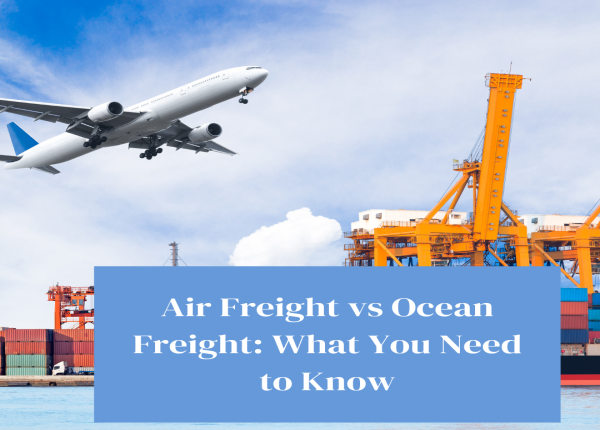
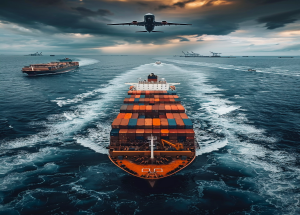
When it comes to global shipping, the choice often comes down to air freight vs ocean freight. Air freight is faster and reliable, while ocean freight offers a cost-effective way to move large volumes.
For businesses, choosing the right method can impact costs, delivery times, and customer satisfaction.
In this article, we’ll explore the differences between air freight and ocean freight to help you make the most practical decision. Let’s get started!
Understanding the Basics
Air Freight
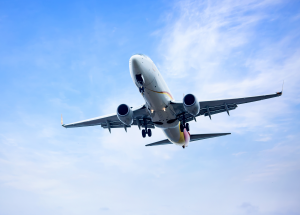
Air freight is shipping goods by airplane. It is perfect for high-value, lightweight, or time-sensitive items because it is dependable and quick.
Electronics, medical supplies, perishable food, and urgent shipments are a few examples. However, there are restrictions on weight, size, and specific items, and the speed comes at a price: prices are significantly higher.
Ocean Freight
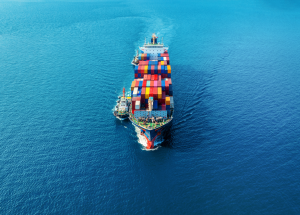
Ships are used in ocean freight to move cargo. Even though it moves more slowly than air, it’s incredibly economical for moving heavy, bulky, or non-urgent goods.
It is excellent for large volumes where speed is not a concern, such as full container loads of machinery, furniture, or raw materials.
When to Use Air Freight vs Ocean Freight
| Scenario | Best Choice | Reasons |
| Urgent delivery/perishables/high-value goods | Air Freight | Very rapid transit; limited handling. |
| Large shipments/heavy cargo/budget constraints | Ocean Freight | Lower cost per unit; more capacity; good for non-urgent supply |
| Time is flexible; focus on sustainability | Ocean Freight | Ships have lower emissions per ton than planes. |
| High-security or fragile items | Air Freight | Less handling, faster customs, and better reliability |
Cost Comparison
One of the most significant distinctions between air and ocean freight is price. Air freight typically costs between $4 and $12 per kilogram, depending on the speed and route.
However, ocean freight is significantly less expensive: full container loads (FCL) have a fixed rate per container, which is typically several thousand dollars for a 20- or 40-foot container, and less-than-container loads (LCL) may cost less than $1.50/kg.
There are also hidden costs to watch out for:
- Fuel surcharges
- Handling fees at airports or ports
- Customs clearance/documentation
- Security, peak season, or route premium charges
Practical Tip: If your goods are non-urgent, ocean freight almost always ends up being more cost-effective. Unless you truly need fast delivery, the savings in freight charges plus fewer surcharges often outweigh the time trade-off.
Speed & Transit Times
Speed is one of the most noticeable distinctions between air freight and ocean freight.
Air Freight
- Typically, international air freight reaches its destination in 1–5 days for standard service.
- Express services or direct flights can even cut this to just 1–3 days, depending on origin, destination, and routing.
Ocean Freight
- Ocean freight, or sea shipping, often takes 20–45 days, especially for international routes.
- In some cases, depending on port congestion, customs delays, or long trade lanes, it can stretch beyond 45 days.
A useful tip
Choose air freight if you’re shipping samples, seasonal, or perishable goods. Air is the best option when timing is crucial because of its quicker transit time.
In contrast, goods that are not urgent and can wait for the slower, more cost-effective mode are better suited for ocean freight.
Cargo Capacity & Weight Limitations
Cargo limits are a significant factor when comparing air freight to ocean freight.
Air Freight
Air carriers enforce strict weight and size restrictions. Many airlines limit a single package to 100–500 kg, depending on the route and aircraft.
Also, “dimensional weight” (how much space a package occupies) often matters more than actual weight for pricing.
Large cargo that exceeds standard dimensions (e.g., over 2.44 m × 3.15 m) may require special chartered flights or be rejected.
Ocean Freight
Ocean or sea freight is much more forgiving with size and weight. A standard 20-foot container can carry a gross weight of up to 28,000 kg (≈ 62,150 lbs), excluding the container’s own weight.
Heavy bulk items and oversized machinery fit better in ocean shipping because full containers are handled. There is still a practical limit, such as the limitations of road and rail transportation when transporting containers inland.
Environmental Impact
Air freight and ocean freight have quite different effects on the environment.
Air Freight
- Emits a lot of greenhouse gases per ton-kilometer—jet fuel burns fast and produces CO₂, NOx, and other pollutants.
- Air shipments contribute disproportionately to climate change because of how energy-intensive flight is.
Ocean Freight
- Ships produce far fewer emissions per unit carried over distance. For many routes, ocean freight’s carbon footprint is 10-25 times lower than air freight’s.
- Ocean freight is generally more environmentally friendly, but it isn’t perfect—it can still pollute through fuel oil, sulfur emissions, or marine pollution.
Practical Tip
When speed isn’t a priority, choose ocean freight if your company wants to maintain sustainability or lessen its environmental impact.
When it comes to bulk or non-urgent goods, choosing the ocean over the air can significantly reduce emissions and support long-term green goals.
Customs & Documentation
When comparing air freight vs ocean freight, the way customs and paperwork work is quite different.
Air Freight
- Clearance tends to be faster. Air shipments often clear customs within 1-2 days if all documents are correct.
- Less complex paperwork (air waybills, invoices, and packing lists) and fewer stops help speed things up.
Ocean Freight
- Requires more documentation (bill of lading, certificates, possibly multiple permits), especially for full or less-than-container loads.
- Clearance takes longer; depending on port traffic, inspections, and paperwork delays, it can take three to seven days or longer.
Practical Decision-Making Guide: Air Freight vs Ocean Freight
Here’s a simple checklist or decision tree to help you choose between air freight vs ocean freight:
Use air freight when:
- The shipment is small or light
- It’s urgent (you need it fast)
- It’s high-value (electronics, luxury items, important documents)
- It’s perishable or time-sensitive (fresh food, medicines)
- It’s seasonal and timing matters
Use ocean freight when:
- You’re shipping bulk or heavy goods
- Delivery is non-urgent
- Cost is a major concern
- You want to be environmentally conscious
- Your goods are large, oversized, or oddly shaped
How to apply this
- List your factors: size, weight, value, urgency, and environmental goals.
- Check off which side each factor leans toward (air or ocean).
- If more factors favor the ocean, go by sea; if urgency and value dominate, air may be better.
Final Thought
Choosing between air freight vs ocean freight comes down to your priorities: cost, speed, type of cargo, and environmental goals.
If time is your biggest constraint, air may be the better pick. If cost savings, heavy loads, or sustainability matter most, ocean freight often wins.
Before you commit, list your shipment’s traits and goals. Compare what matters most to your business. Then reach out to a freight forwarder or logistics expert; they can help tailor a plan to your specific needs and avoid costly mistakes.
Frequently Asked Questions (FAQs)
Which is cheaper: air freight or ocean freight?
Ocean freight is generally cheaper, especially for large or heavy cargo, while air freight is more expensive but faster.
How do I decide between air and ocean freight?
Consider factors like cost, delivery speed, cargo size, urgency, and sustainability.
Is air freight safer than ocean freight?
Air freight has a lower risk of theft and damage due to less handling, but ocean freight is still safe for most goods when packaged properly.
Can I ship perishable goods by ocean freight?
Yes, but it requires refrigerated containers and takes longer. For freshness, air freight is often better.
Can I use both air and ocean freight together?
Yes, many businesses ship urgent items by air and bulk items by sea to balance cost and speed.