Suppose a company is experiencing trouble with lost goods, delayed deliveries, and increasing expenses that annoy both managers and clients.
These common challenges highlight why many companies are turning to logistics automation systems.
In this guide, you’ll learn what logistics automation systems are, how they work, their benefits, and why they matter for modern supply chains.
What Is Logistics Automation?
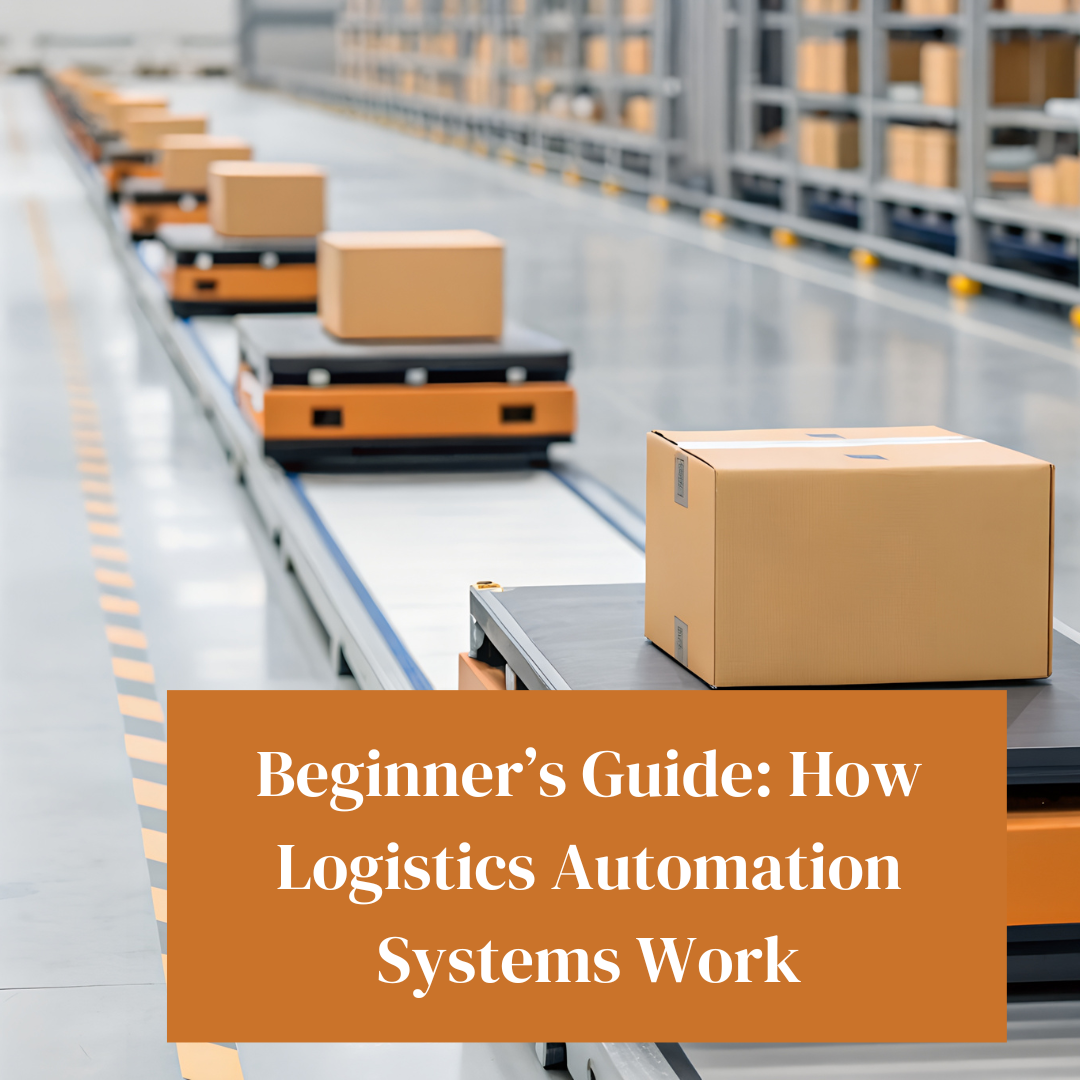
Logistics automation systems are tools, hardware, and software that facilitate the movement, storage, and tracking of goods with minimal manual effort. Think robotics, intelligent machines, sensors, and smart software all working together to make supply chains faster, more accurate, and less error‐prone.
Key Differences: Traditional vs Automated Logistics
| Aspect | Traditional Logistics | Automated Logistics (with logistics automation systems) |
| Labor | Manual work: humans picking, packing, routing, and entering data by hand. | Machines/robots handle repetitive tasks; software automatically directs operations. |
| Speed and Accuracy | Slower processes, more human error, and delays in data updates. | Faster order processing, fewer mistakes, and real-time visibility. |
| Scalability | Scaling up means hiring more people, physical labor burdens, and a greater risk of bottlenecks. | Easier to scale by adding more machines/software; less dependence on manual labor. |
| Costs | Higher labor costs, more waste/errors, and slower decision-making. | Higher upfront investment but lower running cost, better efficiency, and long-term savings. |
Examples of Automation in Logistics
- Automated Warehouses System: Warehouses using Automated Storage and Retrieval Systems (AS/RS) where cranes or shuttles move pallets or boxes without human push or lift.
- Robotic Picking Systems: Robots (or “bots”) that fetch items from shelves to fulfill orders, reducing walk time and error. Amazon’s use of mobile robots is a well-known case.
- AI-Powered Routing & Inventory Forecasting: Software that uses data to optimize delivery routes, predict demand, and schedule restocking automatically.
- Autonomous Vehicles & AGVs (Automated Guided Vehicles): Small self-driving carts or trucks inside warehouses or between facilities, transporting goods without manual driving.
Core Components of Logistics Automation Systems
1. Warehouse Automation
These are the tools and machines inside a warehouse that do physical work with little human effort. Examples include robots that move items, automated storage & retrieval systems (AS/RS) where machines automatically store or pick goods, and conveyor belts that carry items between stations.
2. Transportation Management Systems (TMS)
A TMS is software that handles moving things from one place to another. It optimizes delivery routes, tracks vehicles in real time, and manages fleets (drivers, vehicles, and schedules). It also helps choose the best way to ship (by road, air, or sea) and keeps an eye on costs and timing.
3. Inventory Management Systems
These systems keep track of what products are in stock—how many, where they are, and when they need restocking. They also use forecasting tools to predict future demand based on past sales, seasons, and trends. This helps avoid having too much stock or running out.
4. Order Processing & Fulfillment
This component makes sure orders are handled quickly and correctly. It uses technologies like barcode or RFID scanning to identify items, automated sorting so items go to the right place in the warehouse or shipment line, and systems that coordinate picking, packing, and shipping.
These reduce human error and speed up fulfillment.
5. Data & Analytics Tools
These are the brains behind the system. Using dashboards, reports, predictive analytics, and IoT sensors (devices that collect data like temperature, location, and speed), they gather all the information and turn it into insights.
Businesses use them to see what’s working, catch problems early, and make better decisions in their logistics automation systems.
How Logistics Automation Systems Work (Step-by-Step Flow)
1. Order Is Placed → System Triggers Automated Order Processing
When a customer orders something, the system immediately captures the order, validates payment and customer data, and passes it along for fulfillment.
This part of the logistics automation systems ensures the order isn’t lost or delayed from the start.
2. Inventory Check → Real-Time System Updates
The system checks whether the ordered item is in stock. If not, it alerts the supply/warehouse. Inventory levels are updated live, so everyone (warehouse, sales, customers) sees the right status.
3. Automated Warehouse Retrieval/Picking
If stock is available, robots or automated equipment retrieve items from their storage location. AS/RS or robotic pickers may bring them to packing stations.
4. Packaging & Labeling via Automated Tools
Once items are at the packing station, automated tools label, wrap, or box them, preparing them for shipping. Barcodes or RFID tags are added automatically to help with tracking.
5. Transportation Planning through a TMS (Transportation Management System)
Next, the system picks the best route, selects which carrier or vehicle is ideal, plans the load, and schedules pickup/delivery. Costs, time, and other constraints are taken into account.
6. Real-Time Tracking & Monitoring Until Delivery
After dispatch, the package is tracked with GPS, RFID, or sensors, so both sender and receiver can see its journey. If any delays or issues crop up, the system flags them so corrective actions can be taken.
Benefits of Logistics Automation Systems
- Logistics automation systems automate repetitive tasks, reducing labor costs. You spend less on error correction when there are fewer errors and waste.
- Orders are processed more quickly and with fewer errors when barcode or RFID scanning, automated sorting, and optimized routing are used. Delivery times are shortened, and customers receive their orders.
- Customer confidence is bolstered when deliveries are made on schedule, items are accurate, and updates (like tracking) are available. Logistics automation systems help deliver reliable, transparent service.
- Automated systems are easier to scale than manual operations as order volumes rise. Companies don’t need to hire a lot of new employees to add more robots, more software, or more TMS features.
- Through sensors, tracking, dashboards, and automatic updates, companies see what’s happening with inventory, deliveries, and potential delays. This lets them react quickly and plan better.
Real-World Metrics & Case Studies
1. Amazon Robotic Warehouses
At its new facility in Shreveport, Louisiana, Amazon has cut fulfillment costs by about 25% by implementing robotics at every stage of the fulfillment process. According to analysts, Amazon could save up to $10 billion annually by 2030 if next-generation robotic warehouses process 30–40% of U.S.
2. UPS ORION Route Optimization
UPS has reduced its annual mileage by approximately 100 million miles and its fuel consumption by approximately 10 million gallons since implementing ORION. Additionally, each route using ORION today reduces driver travel by about 6-8 miles per day.
3. Small Business/Cloud-Based Automation Tool
After automating warehouse, order processing, and inventory functions, a company in Sweden that used a cloud-based logistics/SaaS platform reported a 30% increase in inventory accuracy and a 40% decrease in manual workload.
Challenges & Limitations of Logistics Automation Systems
There are challenges in putting logistics automation systems into place. First, there are significant upfront costs: companies have to shell out a lot of money for sensors, hardware, software, and setting up new infrastructure.
It can be difficult to integrate with legacy systems, as outdated software or equipment may not be compatible, leading to delays and additional expenses.
Third, automation frequently results in more data and connected devices, both of which require protection, raising cybersecurity risks.
And lastly, the human side: training requirements and workforce adaptation. Businesses must spend money on training and change management because employees may be resistant to change or lack the necessary skills.
The Future of Logistics Automation Systems
- Blockchain, AI, IoT, driverless cars, drones, and other emerging technologies will advance logistics automation systems.
- Automation will help build sustainable & resilient supply chains: less waste, lower emissions, more energy efficiency, and faster recovery from disruptions.
- Early adopters of logistics automation systems can gain a competitive advantage, cheaper costs, better customer service, and readiness for future technological developments.
Final Thoughts
Automation systems for logistics are no longer a future possibility—they’re a crucial part of how top supply chains run today. These systems bring tangible benefits: faster order processing, fewer errors, lower costs, and more satisfied customers.
While implementing them can be costly and challenging and require tech integration, businesses that plan and adjust their workforce can reap significant rewards.
In the future, developments like blockchain, AI, IoT, and driverless cars will increase the influence of logistics automation systems. They will improve operations’ sustainability, resilience, and transparency in addition to speeding them up.
Early adoption of automation can give businesses a competitive edge in the form of improved environmental performance, faster response times to disruptions, and stronger supply chain visibility.
Investing in logistics automation systems is not a luxury but rather a strategic necessity for any company that is serious about efficiency and expansion.
Frequently Asked Questions (FAQs)
Are logistics automation systems only for big companies?
No. While large companies often have larger-scale systems, smaller and medium businesses can also use components (like barcode/RFID scanning, cloud-based tools, or AMRs) to improve efficiency without huge upfront costs.
How long does it take to implement a logistics automation system?
It depends on scale and complexity. Simple upgrades (e.g., new software, barcode scanning) can take a few weeks. More complex setups (warehouse robotics, full integration) may take several months.
What’s the return on investment (ROI)?
ROI varies, but many businesses recoup their costs within 1–3 years through savings in labour, fewer errors, lower transport costs, and improved customer satisfaction.
Will automation replace all jobs?
Not completely. Automation handles repetitive and manual tasks, but people are still needed for oversight, maintenance, decision-making, exception handling, and system design/training.
What are the risks involved?
Risks include high upfront costs; data breaches or cybersecurity threats; difficulty integrating with older “legacy” systems; and resistance from staff who must adapt to new technology.